
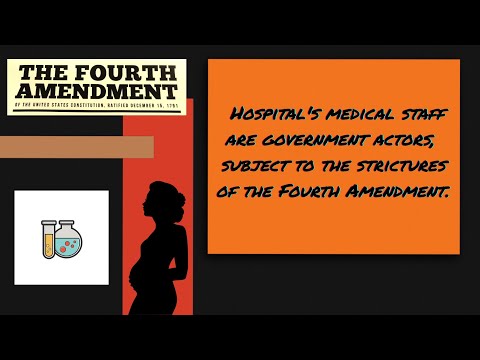
Held: A state hospital’s performance of a diagnostic test to obtain evidence of a patient’s criminal conduct for law enforcement purposes is an unreasonable search if the patient has not consented to the procedure. The interest in using the threat of criminal sanctions to deter pregnant women from using cocaine cannot justify a departure from the general rule that an official nonconsensual search is unconstitutional if not authorized by a valid warrant. Ferguson v. City of Charleston, 532 U.S. 67, 67–68, 121 S. Ct. 1281, 1283, 149 L. Ed. 2d 205 (2001)
While state hospital employees, like other citizens, may have a duty to provide the police with evidence *85 of criminal conduct that they inadvertently acquire in the course of routine treatment, when they undertake to obtain such evidence from their patients for the specific purpose of incriminating those patients, they have a special obligation to make sure that the patients are fully informed about their constitutional rights, as standards of knowing waiver require.24 Cf. Miranda v. Arizona, 384 U.S. 436, 86 S.Ct. 1602, 16 L.Ed.2d 694 (1966).
Ferguson v. City of Charleston, 532 U.S. 67, 84–85, 121 S. Ct. 1281, 1292, 149 L. Ed. 2d 205 (2001)
Read the full case here: Ferguson v. City of Charleston 532 U.S. 67 (2001), https://www.oyez.org/cases/2000/99-936
Filed under: 4th Amendment & Searches

Anton Vialtsin, Esq., E.I. is a San Diego criminal defense attorney and CJA Panel member in the Southern and Central Districts of California. New case breakdowns every Wednesday on YouTube.
Related articles
- Police Tased Him and His Pet Snake for “Matching the Description” Because He Had Dreads. OVERTURNEDOctober 14, 2026 · ▶ Video
- FLOCK CAMERA Searches Violate the 4th Amendment; Federal Judge Throws Out ALL Evidence!October 7, 2026 · ▶ Video
- Can Police Stop You JUST Because You’re on Probation or Parole? (California Law)September 2, 2026 · ▶ Video
- Cops Wore NIGHT VISION Goggles to Spy on This Driveway… Was It Legal?August 12, 2026 · ▶ Video