

The Fourth Amendment protects individuals from unreasonable government searches and seizures.
• Seizures can be split into two categories.
o A seizure of property is “some meaningful interference with an individual’s possessory interests in that property.”
o A seizure of an individual occurs when an individual reasonably believes that he is not at liberty to leave a government official’s presence, given all of the circumstances surrounding the incident.
• Warrantless searches under the Fourth Amendment are typically per se unreasonable.
o The Supreme Court decided in Katz v. United States that the attachment of an eavesdropping device outside of a public phone booth constituted an unreasonable search.
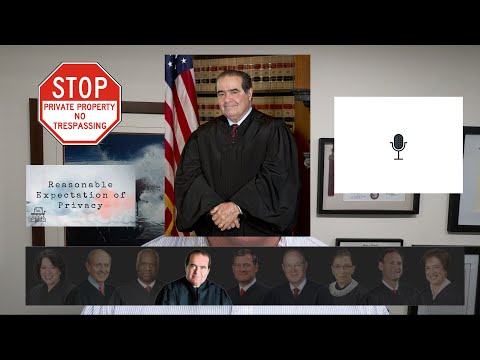
REP. If an individual has a subjective expectation of privacy over the domain in question and society objectively recognizes that expectation as reasonable, then the search is unconstitutional unless law enforcement acquired a warrant or one of the exceptions to the warrant requirement applies.
• Technology and 4th Amendment
o In United States v. Knotts, the Supreme Court concluded that the surveillance, tracking, and following of an individual traveling on a public roadway did not constitute as a search or seizure.
Beeper
Consent from original owner
No REP on public roadways
Does not address duration of the surveillance
o In United States v. Karo, the Supreme Court held that the warrantless use of an electronic monitor within a container was reasonable and did not infringe on Karo’s interests within the meaning of the Fourth Amendment.
Beeper
Led to the facility and not the specific locker
No REP on public roadway
o In United States v. Jones, the Supreme Court held that law enforcement committed a search by attaching a GPS tracking device to a vehicle.
GPS
Government “physically occupied private property for the purpose of obtaining information,” the encroachment and intrusion on a protected area constituted a search under the Fourth Amendment.
Distinguished Karo, where law enforcement obtained consent of the original owner prior to the beeper being placed in the container to track the vehicle.
“The Katz reasonable-expectation-of-privacy test [] added to, not substituted for, the common-law trespassory test.”
o Carpenter v. United States, holding that the warrantless acquisition of cell-site information violated Carpenter’s Fourth Amendment right against searches and seizures.
https://youtu.be/VmjsxoM83rM
cell-site information implicated greater privacy concerns than did GPS tracking
A cell-site information system would allow the Government to gather “near perfect surveillance”
Filed under: 4th Amendment & Searches · Border & Immigration Crimes

Anton Vialtsin, Esq., E.I. is a San Diego criminal defense attorney and CJA Panel member in the Southern and Central Districts of California. New case breakdowns every Wednesday on YouTube.
Related articles
- San Diego Alien Smuggling AttorneyGuide
- Border Patrol Tracked Him in Real Time & His Old Guilty Plea Buried Him in the New CrimeMarch 4, 2026 · ▶ Video
- Border Patrol Tracked Him in Real Time & His Old Guilty Plea Buried Him in the New CrimeMarch 4, 2026 · ▶ Video
- Tom Homan claims ICE officers ‘don’t need probable cause’ to ‘briefly detain’ people. Is that true?July 16, 2025 · ▶ Video