
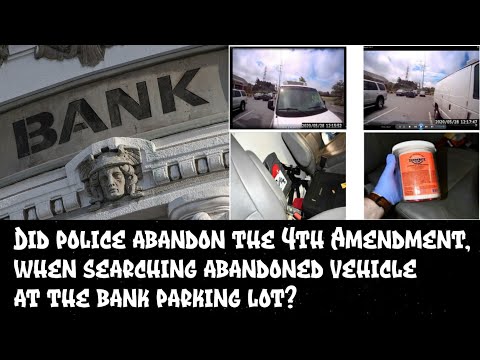
Alexander Hillel Treisman appeals the district court’s denial of his motion to suppress evidence that police discovered while searching his van without a warrant. But warrantless searches of vehicles carried out as part of law enforcement’s community caretaking functions do not violate the Fourth Amendment if they are reasonable under the circumstances. And because the record here supports the district court’s conclusion that the officers acted reasonably in searching the van under their community caretaking functions, we affirm.
The Supreme Court first mentioned this concept in Cady v. Dombrowski, 413 U.S. 433 (1973). There, the Court explained,
Some [contacts between citizens and police involving automobiles] will occur because the officer may believe the operator has violated a criminal statute, but many more will not be of that nature. Local police officers [] frequently investigate vehicle accidents in which there is no claim of criminal liability and engage in what, for want of a better term, may be described as community caretaking functions ….
Id. at 441. Elaborating, the Court described community caretaking functions as conduct “totally divorced from the detection, investigation, or acquisition of evidence relating to the violation of a criminal statute.” Id. And it also clarified that the test for evaluating whether community caretaking searches violate the Fourth Amendment is reasonableness. Id. at 442. In other words, is the search reasonable given the totality of the circumstances?
Full case here: United States v. Treisman, No. 21-4687 (4th Cir. Jun. 23, 2023), https://casetext.com/case/united-states-v-treisman
Filed under: 4th Amendment & Searches

Anton Vialtsin, Esq., E.I. is a San Diego criminal defense attorney and CJA Panel member in the Southern and Central Districts of California. New case breakdowns every Wednesday on YouTube.
Related articles
- Police Tased Him and His Pet Snake for “Matching the Description” Because He Had Dreads. OVERTURNEDOctober 14, 2026 · ▶ Video
- FLOCK CAMERA Searches Violate the 4th Amendment; Federal Judge Throws Out ALL Evidence!October 7, 2026 · ▶ Video
- Can Police Stop You JUST Because You’re on Probation or Parole? (California Law)September 2, 2026 · ▶ Video
- Cops Wore NIGHT VISION Goggles to Spy on This Driveway… Was It Legal?August 12, 2026 · ▶ Video