

A police officer looked in an apartment window through a gap in the closed blind and observed respondents Carter and Johns and the apartment’s lessee bagging cocaine. After respondents were arrested, they moved to suppress, inter alia, cocaine and other evidence obtained from the apartment and their car, arguing that the officer’s initial observation was an unreasonable search in violation of the Fourth Amendment. Respondents were convicted of state drug offenses. The Minnesota trial court held that since they were not overnight social guests, they were not entitled to Fourth Amendment protection, and that the officer’s observation was not a search under the Amendment. The State Court of Appeals held that Carter did not have “standing” to object to the officer’s actions because the evidence indicated that he used the apartment for a business purpose—to package drugs—and, separately, affirmed Johns’ conviction without addressing the “standing” issue. In reversing, the State Supreme Court held that respondents had “standing” to claim Fourth Amendment protection because they had a legitimate expectation of privacy in the invaded place, and that the officer’s observation constituted an unreasonable search.
Held: Any search that may have occurred did not violate respondents’ Fourth Amendment rights. The state courts’ analysis of respondents’ expectation of privacy under the rubric of “standing” doctrine was expressly rejected in Rakas v. Illinois, 439 U.S. 128, 140, 99 S.Ct. 421, 58 L.Ed.2d 387. Rather, to claim Fourth Amendment protection, a defendant must demonstrate that he personally has an expectation of privacy in the place searched, and that his expectation is reasonable. Id., at 143–144, n. 12, 99 S.Ct. 421. The Fourth Amendment protects persons against unreasonable searches of “their persons [and] houses,” and thus indicates that it is a personal right that must be invoked by an individual. But the extent to which the Amendment protects people may depend upon where those people are. While an overnight guest may have a legitimate expectation of privacy in someone else’s home, see Minnesota v. Olson, 495 U.S. 91, 98–99, 110 S.Ct. 1684, 109 L.Ed.2d 85, one **471 who is merely present with the consent of the householder may not, see Jones v. United States, 362 U.S. 257, 259, 80 S.Ct. 725, 4 L.Ed.2d 697. And an expectation *84 of privacy in commercial property is different from, and less than, a similar expectation in a home. New York v. Burger, 482 U.S. 691, 700, 107 S.Ct. 2636, 96 L.Ed.2d 601. Here, the purely commercial nature of the transaction, the relatively short period of time that respondents were on the premises, and the lack of any previous connection between them and the householder all lead to the conclusion that their situation is closer to that of one simply permitted on the premises. Any search which may have occurred did not violate their Fourth Amendment rights. Because respondents had no legitimate expectation of privacy, the Court need not decide whether the officer’s observation constituted a “search.” Pp. 472–474.
Read the full case here: Minnesota v. Carter, 525 U.S. 83 (1998), https://supreme.justia.com/cases/federal/us/525/83/#tab-opinion-1960439
Filed under: 4th Amendment & Searches · Drug Charges
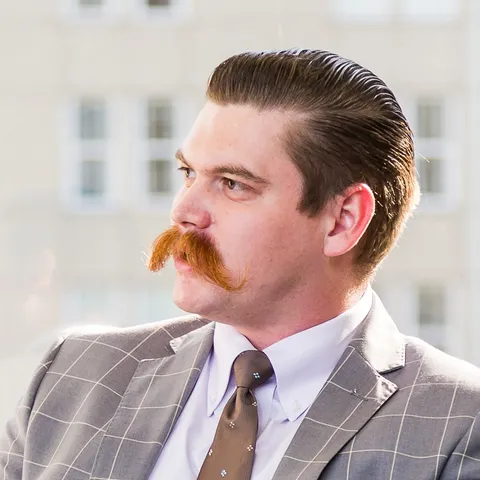
Anton Vialtsin, Esq., E.I. is a San Diego criminal defense attorney and CJA Panel member in the Southern and Central Districts of California. New case breakdowns every Wednesday on YouTube.
Related articles
- Suspended License Since 1993. Cop Towed His Car. Cop Found Drugs & a Gun. Judge Threw It All Out!March 25, 2026 · ▶ Video
- Police Officer Claims He Could Hear Marijuana Being Loaded into a Car. Marijuana has Sound?May 7, 2025 · ▶ Video
- Smoking marijuana two hours prior and bloodshot eyes alone aren’t enough for a DUI arrest.December 25, 2024 · ▶ Video
- Stopped for Broken Taillight, Restrained & Searched Because of High-Crime Area Late at Night.December 18, 2024 · ▶ Video