
Fits of rudeness or lack of gratitude may violate the Golden Rule. But that doesn’t make them illegal or for that matter punishable or for that matter grounds for a seizure.
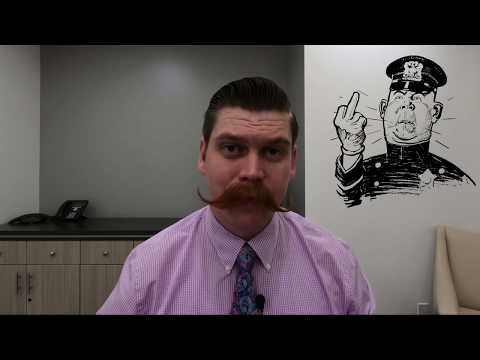
Minard, a police officer in the city of Taylor, Michigan, stopped Cruise-Gulyas in June 2017 for speeding. But he decided to show her leniency and wrote her a ticket for a non-moving violation. As she drove away, Cruise-Gulyas repaid Minard’s kindness by raising her middle finger at him. Minard pulled Cruise-Gulyas over a second time, less than 100 yards from where the initial stop occurred, and amended the ticket to a speeding violation.
Fourth Amendment. Under the facts set forth in the complaint, Minard violated Cruise-Gulyas’s right to be free from an unreasonable seizure by stopping her a second time. All agree that Minard seized Cruise-Gulyas within the meaning of the Fourth Amendment when he pulled her over the second time. Whren v. United States, 517 U.S. 806, 809–10 (1996). To justify that stop, Minard needed probable cause that Cruise-Gulyas had committed a civil traffic violation, id. at 810, or reasonable suspicion that she had committed a crime, United States v. Arvizu, 534 U.S. 266, 273 (2002). He could not rely on the driving infraction to satisfy that requirement. Any authority to seize her in connection with that infraction ended when the first stop concluded. Rodriguez v. United States, 135 S. Ct. 1609,1614 (2015).
First Amendment. Cruise-Gulyas also alleges that Minard violated her free speech rights by stopping her the second time in retaliation for her expressive, if vulgar, gesture. To succeed, she must show that (1) she engaged in protected conduct, (2) Minard took an adverse action against her that would deter an ordinary person from continuing to engage in that conduct, and (3) her protected conduct motivated Minard at least in part. Thaddeus-X v. Blatter, 175 F.3d 378, 394 (6th Cir. 1999) (en banc).
In his reply brief, Minard analogizes his case to a prosecutor who might reasonably think he could take a plea deal off the table if a defendant behaved offensively or a judge who might reasonably think that she could increase a defendant’s sentence if the defendant raised his middle finger at her right after she read her sentence from the bench. Judges, it is true, have wide latitude to consider expressive conduct during sentencing. See 18 U.S.C. § 3661; United States v. White Twin, 682 F.3d 773, 778–79 (8th Cir. 2012). But we need not wade through those complicated questions now because these facts differ materially. As alleged, the first stop had ended, a constitutionally significant event, before the officer initiated the second, unjustified stop. The Supreme Court has said that any justification for the first stop ceases when that stop ends. Rodriguez, 135 S. Ct. at 1614. These facts more closely resemble a prosecutor who tries to revoke a defendant’s deal a few days after everyone has agreed to it or a judge who hauls the defendant back into court a week or two after imposing a sentence based on the defendant’s after-the-fact speech. Those examples seem more problematic and more in keeping with today’s decision. Minard, in short, clearly had no proper basis for seizing Cruise-Gulyas a second time.
Full Opinion at http://www.opn.ca6.uscourts.gov/opinions.pdf/19a0043p-06.pdf
DEBRA LEE CRUISE-GULYAS v. MATTHEW WAYNE MINARD
Filed under: 4th Amendment & Searches

Anton Vialtsin, Esq., E.I. is a San Diego criminal defense attorney and CJA Panel member in the Southern and Central Districts of California. New case breakdowns every Wednesday on YouTube.
Related articles
- Police Tased Him and His Pet Snake for “Matching the Description” Because He Had Dreads. OVERTURNEDOctober 14, 2026 · ▶ Video
- FLOCK CAMERA Searches Violate the 4th Amendment; Federal Judge Throws Out ALL Evidence!October 7, 2026 · ▶ Video
- Can Police Stop You JUST Because You’re on Probation or Parole? (California Law)September 2, 2026 · ▶ Video
- Cops Wore NIGHT VISION Goggles to Spy on This Driveway… Was It Legal?August 12, 2026 · ▶ Video